Inner Range Coaching
Coaching for those who do hard things in service to others.
Most coaching begins with a deficit. This work begins with possibility. You already possess the capacity to grow, adapt, and meet what life asks of you. The climb is learning to access it—especially when it's hardest to see.

The Premise
Life is both hard and beautiful. The science calls that normal.
Inner Range is built on a different premise than most coaching: you already have what you need. The work is developing the capacity to access it—under pressure, in uncertainty, and through the long stretches where progress isn't immediately visible. It's also learning to recognize resistance when it appears and working with it rather than against it.
No prescriptions. No outcome guarantees. No performance of expertise. Just careful attention, honest conversation, and the discipline of showing up to the work.
The Approach
The work is not a system. It doesn't begin with a gap analysis or a goal-setting worksheet. It begins with a question: What are you actually working with?
It also begins with the belief that you are enough. You don't come to coaching because you're broken. You come because you've chosen to be intentional about how you live, lead, and grow.
From there, we build. The work is informed by neuroscience, attachment theory, mindfulness, and performance psychology—not as formulas to apply, but as lenses for understanding what's happening under pressure and what makes meaningful change possible.
Every engagement is different because every person is different. What remains consistent is the quality of attention, the willingness to follow where the work actually leads, and the commitment to stay with it until something genuinely shifts.
Who This Is For
This work is for people who already operate at a high level and want to become more intentional about how they live and lead.
Many of my clients are veterans, first responders, executives, athletes, or others who have carried significant responsibility and now find themselves reexamining how they want to show up—in their work, their relationships, and their lives.
It's also for people navigating transition: the end of a career, the loss of someone important, or a shift in identity. Times when the old maps no longer fit and it's time to make sense of what comes next.
You don't need to be in crisis. You need to be willing to do the work.
How the Work Goes
We start with a conversation—no intake forms or assessments. Just an honest discussion about what you're working with, what you're hoping for, and whether we're a good fit.
If we decide to work together, we meet regularly by video for 60-minute sessions. The pace and frequency depend on the work itself rather than a predetermined schedule.
Between sessions, I'm available when something important comes up. Not for routine check-ins or accountability nudges, but for the moments when you need another perspective to think something through.
Most coaching engagements last three to six months, though some unfold over a longer arc. We'll know when the work has reached a natural conclusion.

About
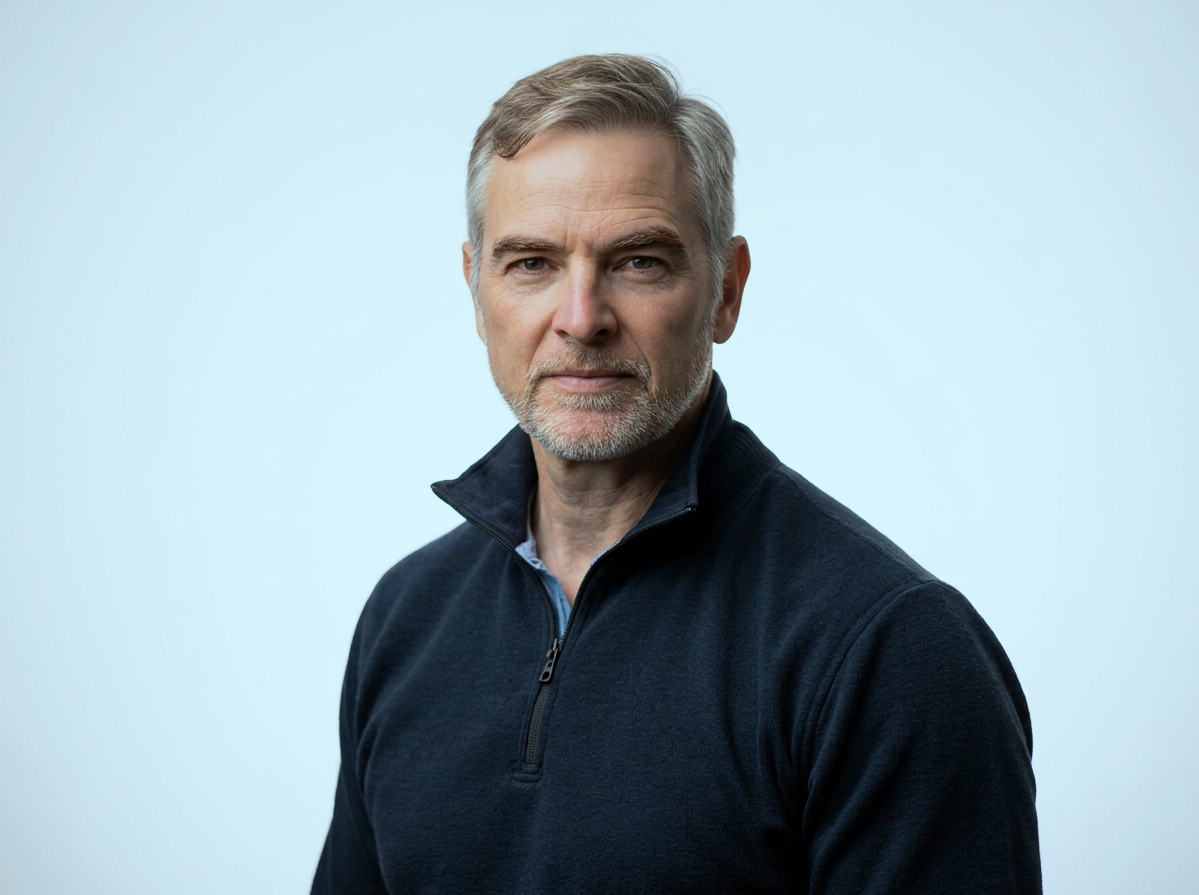
Richard is a retired law enforcement officer, military veteran, researcher, and coach. He works with people who operate under real pressure—helping them perform, recover, and lead with greater clarity, resilience, and humanity.
His training is both practical and interdisciplinary. Richard is an Associate Certified Coach (ACC) through the International Coaching Federation and completed graduate-level coach education at Fielding Graduate University. He is certified in mindfulness facilitation through UCLA's Semel Institute for Neuroscience and Human Behavior and holds a professional certificate in Interpersonal Neurobiology from Portland Community College's Health Professions Campus, where he studied how relationships and lived experience shape the brain and nervous system. He earned a B.S. in Economics from Portland State University and an MBA from the University of Phoenix.
For more than five years, Richard partnered with Buddha, a Bernese Mountain Dog, as a Therapy K9 team. After Buddha's death from cancer in the spring of 2025, Oberon joined the family and is now training to continue that work.
Richard is currently pursuing a Master of Social Work at Boise State University, where he is preparing for clinical licensure as a therapist. His coaching practice and clinical training intentionally develop in parallel—bringing together evidence-based coaching, neuroscience, mindfulness, and social work into a single, integrated approach to helping people thrive.